
Bitcoin Lags U.S. Treasuries by 12% in 12-Month Performance
- Bitcoin is going through a rough patch, with fresh data showing the crypto now sits 12 percentage points behind U.S. Treasuries over the last year. This performance gap marks an unusual shift, especially considering Bitcoin’s history of beating most major asset classes during bullish market phases.
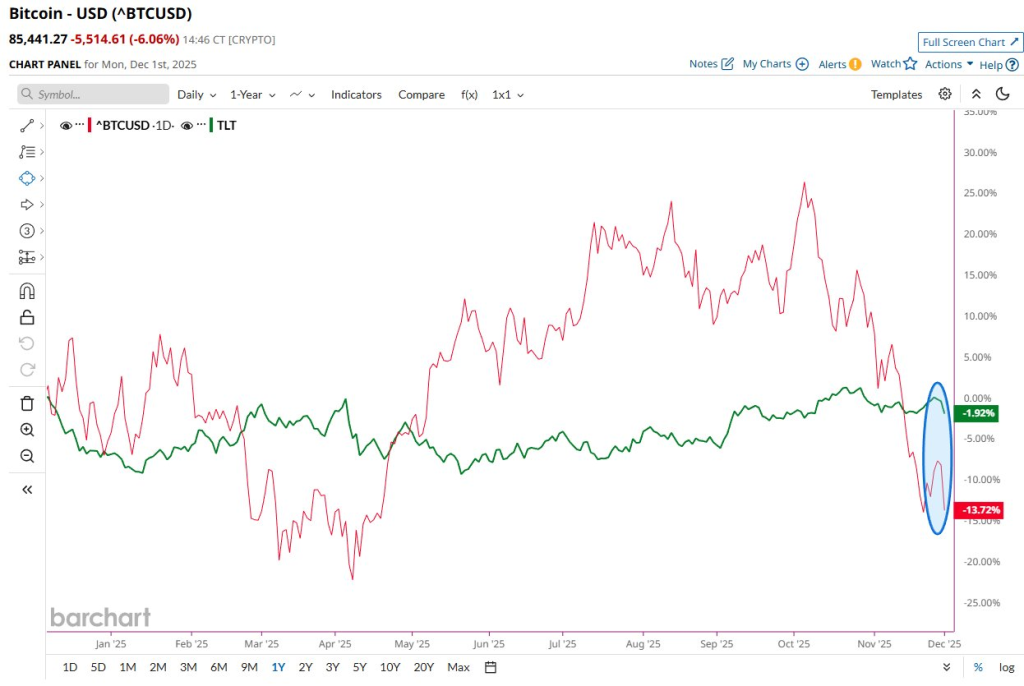
- Over the past 12 months, BTC has struggled to hold onto gains, while U.S. Treasuries attracted investors looking for steady fixed-income returns. Bitcoin saw several strong rallies lasting weeks at a time, but they kept getting wiped out by sharp corrections and volatile swings. Treasuries, meanwhile, found support as traders adjusted to changing economic conditions, including cooling inflation and possible Fed policy shifts. The end result is a clear lag in Bitcoin’s performance compared to government bonds.
The contrast between BTC’s volatility and the relative stability of government bonds has contributed to this unusually wide performance spread.
- This divergence shows how market sentiment has shifted as investors deal with tighter liquidity and growing caution around riskier assets. Bitcoin continues responding to regulatory news, institutional money flows, and price ranges where it keeps consolidating. Treasuries benefited from consistent demand driven by yield-seeking investors. The stability of bonds versus Bitcoin’s wild price swings explains much of this 12-point gap.
- This widening spread between BTC and Treasuries could shape where money flows in the near term and affect overall market sentiment. The trend points to investors favoring stable, yield-generating assets during recent economic uncertainty, while Bitcoin waits for clearer triggers related to liquidity conditions and mainstream adoption. How Bitcoin handles these headwinds will be key for determining whether the crypto can bounce back and regain momentum in the months ahead.
My Take: Bitcoin’s 12-point lag behind Treasuries reflects the current risk-off environment where stability trumps speculation. This underperformance isn’t necessarily bearish long-term, but signals that macro uncertainty is driving capital toward predictable returns rather than volatile growth assets.
Source: Barchart

 English