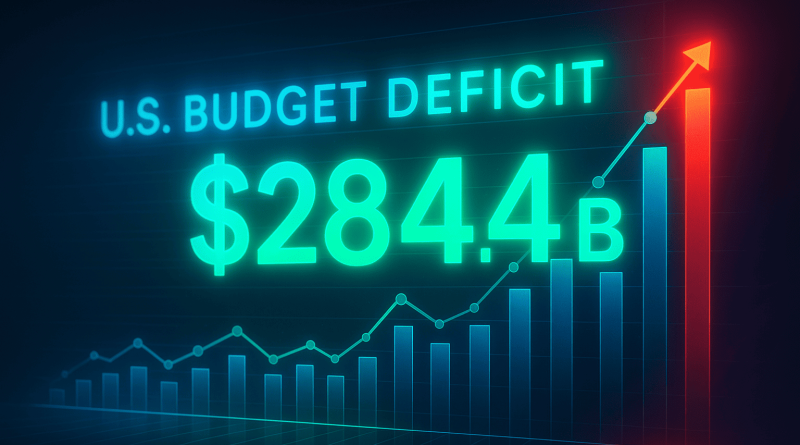
U.S. Budget Deficit Reaches $284.4B in October, Breaking 2020 Record
- The United States just logged its biggest October budget deficit ever, kicking off the new fiscal year on historically shaky ground. Treasury data shows a $284.4 billion shortfall for the month, barely edging out the previous record of $284.1 billion from October 2020, when pandemic stimulus was running full throttle.
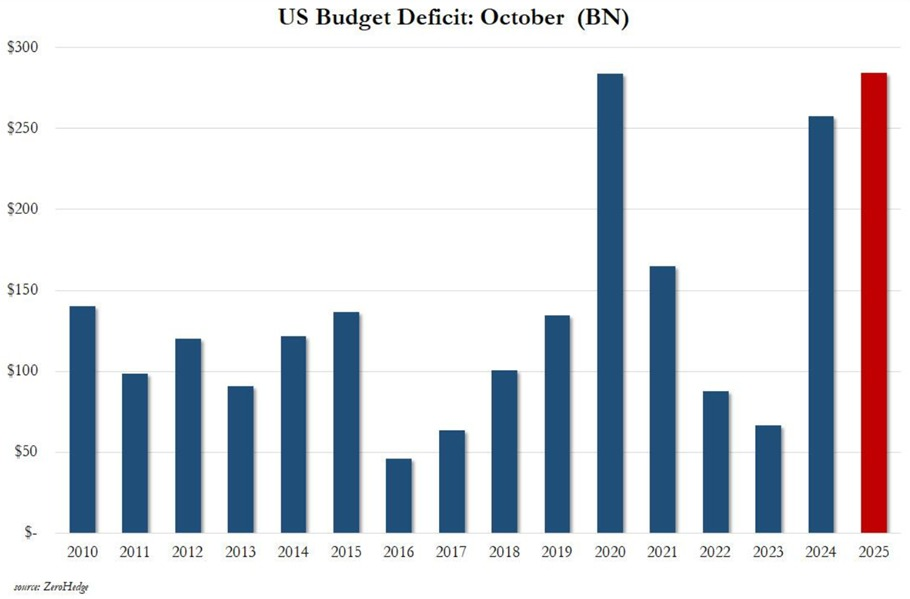
- Federal spending jumped 18 percent year-over-year to $688.7 billion. The six-month moving average for government expenditures now sits around $590 billion, meaning Uncle Sam burned through roughly $22.5 billion every single day last month. That’s a pace that puts recent years to shame, with the 2025 figure standing out sharply against nearly everything except the 2020 spike.
- Looking at the broader picture, October deficits stayed relatively tame through most of the 2010s before the sharp expansion that kicked off in 2020. The latest number is a world apart from the lower baseline we saw in earlier periods. “The U.S. government spent around $22.5 billion per day in October alone,” highlighting just how dramatically federal outlays have accelerated. With last year’s October deficit already pushing toward $250 billion, this year’s jump shows how quickly fiscal pressures are mounting.
- The combination of surging spending and widening deficits feeds right into existing worries about federal borrowing needs heading into 2025. Both expanded outlays and the growing gap between what’s coming in and going out reflect a structural imbalance that’s getting harder to ignore.
- This record-setting start matters because it signals a rapidly intensifying fiscal trajectory just as debt-servicing costs and structural expenditures are already outpacing revenue growth. The scale of October’s shortfall raises serious questions about whether current spending patterns can hold and what persistent, large deficits mean for the broader economy down the line.
My Take: The $284.4B October deficit isn’t just a number, it’s a warning sign. With daily spending hitting $22.5B and no real plan to close the gap, we’re watching fiscal discipline evaporate in real time. Debt costs keep climbing while revenues lag behind.
Source: The Kobeissi Letter



 English