
WTI Oil News: $100 Oil Could Lift US Inflation but Limit GDP Impact
Rising WTI crude oil prices are once again raising questions about the potential impact of $100 oil on the U.S. economy. According to economic estimates from Apollo, a sustained move to $100 per barrel would likely push inflation higher while only modestly affecting overall economic growth.
As @BrianSozzi reported, structural changes in the U.S. energy sector have significantly reduced the vulnerability of the economy to oil price shocks compared with previous decades. This shift suggests that even sharp increases in crude prices may not trigger the same level of economic disruption seen in earlier cycles.
Inflation Impact Could Be Noticeable
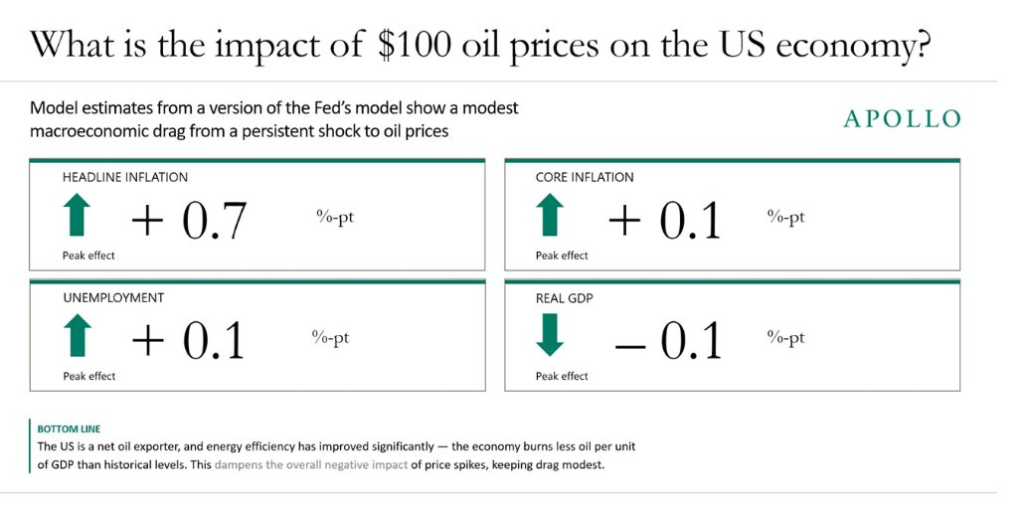
Apollo’s model, based on a version of the Federal Reserve’s macroeconomic framework, suggests that $100 WTI crude oil could raise headline inflation by about 0.7 percentage points at peak impact. The analysis also indicates that core inflation may increase by roughly 0.1 percentage points.
Higher energy prices typically affect the broader economy through multiple channels. Rising fuel costs influence transportation expenses, manufacturing input costs, and supply chain logistics. These pressures can gradually filter into consumer prices across a wide range of goods and services. Additional context around the inflationary risks of rising energy prices can be seen in WTI oil news: energy surge could push US CPI above 3%</strong.
Limited Impact on Growth and Employment
The model also highlights potential effects on employment and economic growth. According to Apollo’s estimates, sustained $100 WTI crude oil could increase the unemployment rate by about 0.1 percentage points while reducing real GDP growth by approximately 0.1 percentage points at peak impact.
Although these figures indicate some economic pressure, the overall macroeconomic drag appears relatively small compared with historical oil shocks that significantly slowed economic activity.
Structural Changes in the U.S. Energy Market
The relatively modest impact reflects major structural changes in the U.S. energy landscape. The United States has become a net exporter of oil, and the economy now consumes significantly less energy per unit of GDP than in previous decades.
These developments help cushion the economic effects of rising crude prices and reduce the likelihood that higher oil costs will trigger a severe economic slowdown. Recent market developments such as WTI and Brent hitting their highest levels since mid-November highlight the renewed strength in energy markets. At the same time, shifting investor sentiment has been reflected in Goldman clients hitting a 10-year bearish low on WTI oil sentiment.
Outlook for the U.S. Economy
Overall, the latest WTI crude oil outlook suggests that higher oil prices could push inflation upward while only slightly slowing economic growth. Structural improvements in energy efficiency and the evolving role of the United States as a major global oil producer have significantly reduced the broader economic vulnerability to oil price spikes.
My Take: $100 oil is no longer the economic wrecking ball it once was. With the U.S. now a net exporter and energy efficiency at record highs, the main risk lies in persistent inflation pressure rather than a collapse in economic growth.
Source: Twitter Post by Brian Sozzi



 English