
WTI Oil News: Energy Surge Could Push US CPI Above 3%
Energy markets are once again becoming a central driver of inflation expectations in the United States. After a period when declining energy prices helped ease inflationary pressure, the recent rally in oil and refined fuels may reverse that trend. Analysts warn that if crude oil continues climbing, higher fuel costs could begin feeding directly into consumer inflation metrics.
Energy Commodities Lead the Rally
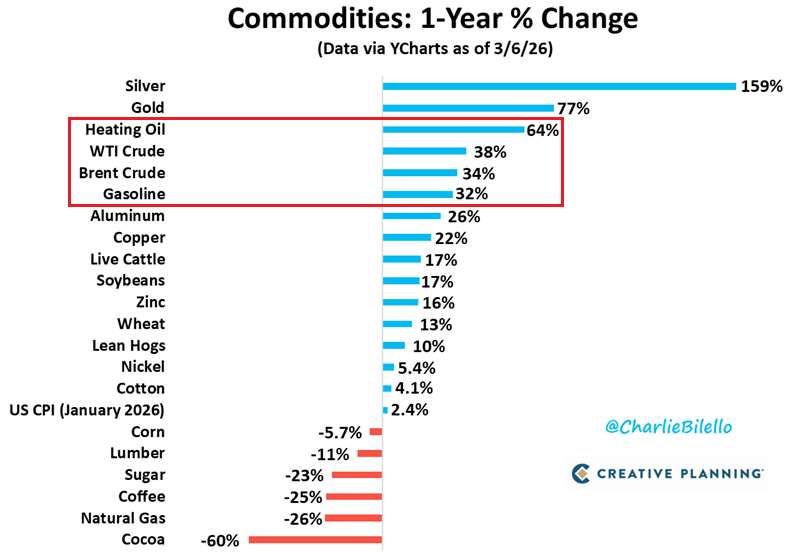
The latest commodities performance data shows that WTI crude oil has gained roughly 38% over the past year. Brent crude has climbed about 34%, while gasoline prices have increased around 32%. Heating oil has surged even more sharply, rising 64% year over year.
This broad advance highlights a powerful rebound across the energy sector and suggests that fuel markets are regaining their role as a key macroeconomic driver.
Oil Prices and the Inflation Transmission Mechanism
As Charlie Bilello reported, falling energy prices previously acted as a tailwind that helped keep U.S. inflation from accelerating. However, that dynamic may now reverse.
If WTI crude oil continues climbing and holds above $100 per barrel, rising fuel and transportation costs could quickly feed into the Consumer Price Index. Energy components such as gasoline and heating oil tend to have a strong pass-through effect on inflation because they influence transportation, manufacturing, and logistics costs across the economy.
Recent market analysis also highlights strengthening momentum across global oil benchmarks, as seen in WTI and Brent hit highest levels since mid-November as oil rally tests 65-70 resistance.
Commodities Context and Broader Market Signals
The broader commodities landscape reinforces this shift. Precious metals have also posted strong gains, with silver rising 159% and gold up 77%. However, the acceleration in energy markets is particularly important for inflation calculations because fuel prices directly impact household spending and business operating costs.
The surge in energy prices could soon turn what had been a disinflationary factor into an inflationary one.
Policy Implications for the Federal Reserve
The implications extend beyond commodity markets and directly affect monetary policy expectations. Rising oil prices can complicate the Federal Reserve’s path toward easing financial conditions.
According to analyst, “there’s no chance the Fed cuts rates next week” if inflation risks re-emerge due to higher oil prices. Sustained increases in WTI crude oil could force policymakers to maintain restrictive monetary conditions longer than investors currently anticipate.
At the same time, sentiment in oil markets remains volatile. Market positioning shows how quickly expectations can shift, as illustrated in Goldman clients hit 10-year bearish low on WTI oil as sentiment collapses.
My Take
Energy is back as inflation’s wildcard. With oil momentum building and the Fed already cornered, any sustained move above $100 could shatter rate-cut hopes entirely. Markets still appear to be underpricing the inflation risk coming from the energy sector.
Source: Twitter Post by Charlie Bilello


 English