
WTI News: Oil Volatility Grows as Hormuz Supply Risks Shift
Volatility in global oil markets has increased as geopolitical risks return to the center of trader attention. WTI crude oil is reacting not only to supply concerns but also to shifting expectations about how much of the risk is already priced into the market. While the Strait of Hormuz remains a critical chokepoint for global energy flows, alternative logistics routes may reduce the severity of potential disruptions.
Supply Risks Drive Oil Market Volatility
Volatility in WTI crude oil (CL) has intensified amid geopolitical tensions surrounding the Strait of Hormuz, one of the most important oil transit chokepoints in the world. The route typically carries about 20 million barrels per day, or roughly 20% of global oil supply, making it a key factor in global price stability.
Recent market swings have highlighted how quickly sentiment can shift, with sharp rallies followed by rapid pullbacks as traders reassess the true scale of supply disruptions. These moves come as WTI oil testing key resistance after recent gains.
Alternative Pipelines Could Reduce Supply Shock Impact
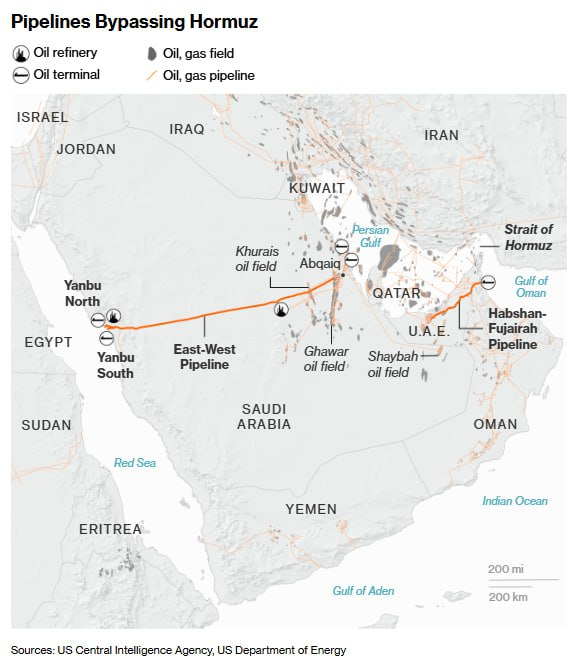
Despite concerns about shipping disruptions, alternative export infrastructure may help limit the severity of any long term supply shock. The map highlights Saudi Arabia’s East-West pipeline, which can transport roughly 5 to 7 million barrels per day to Red Sea export terminals, along with the UAE’s Habshan-Fujairah pipeline capable of moving about 1.5 million barrels daily outside Hormuz.
These alternative routes cannot fully replace Hormuz flows but they could be enough to absorb the first wave of a supply shock.
These alternative routes cannot fully replace Hormuz flows but may reduce the impact of temporary disruptions. Recent market price movements also reflect how traders are balancing geopolitical risks with logistical realities. This comes as multi-month highs in global oil benchmarks.
Demand Trends and Inflation Links Remain Key
Market expectations also depend heavily on how global demand patterns evolve. A significant portion of Gulf oil exports typically flows to Asian economies such as China and India, meaning supply adjustments may partially offset disruptions if shipments continue toward key buyers.
Meanwhile, broader macro implications remain closely tied to inflation trends, including oil prices potentially influencing inflation dynamics. Energy markets also remain sensitive to energy price pressures affecting CPI outlook.
Market Reaction Shows Sentiment Still Dominates
The recent behavior of oil markets suggests that supply disruptions alone do not always guarantee sustained price rallies. Historical market reactions often show that anticipated shortages can already be priced into markets before physical supply changes fully materialize.
At the same time, recent rallies in both Brent and WTI demonstrate how geopolitical risks continue to influence sentiment. Ultimately, the trajectory of WTI crude oil may depend less on headline risks and more on whether actual supply losses become prolonged or remain manageable through alternative infrastructure.
My Take: Hormuz fears move oil fast, but pipelines matter. Markets tend to overprice panic and underprice logistics. Until physical flows are actually disrupted, WTI swings look more like sentiment trades than structural shifts.
Source: Twitter Post by Crypto Rover



 English