
Global Natural Gas Supply Tightens After Qatar Disruption
The global natural gas market is once again facing supply uncertainty as unexpected infrastructure disruptions highlight how fragile LNG trade balances remain. With supply concentrated among a small group of major exporters and demand continuing to shift between regions, even localized outages can quickly create ripple effects across pricing, trade routes, and market sentiment. Recent market movements also show how technical and fundamental factors are increasingly interacting, as seen in natural gas price weakness following key technical breaks.
Supply Shock From Qatar Tightens Global LNG Availability
The global natural gas and LNG market is facing renewed supply pressure after disruptions to Qatar’s Ras Laffan export complex tightened global availability. The shutdown is removing roughly three LNG cargoes per day, representing close to 20% of global LNG trade flows.
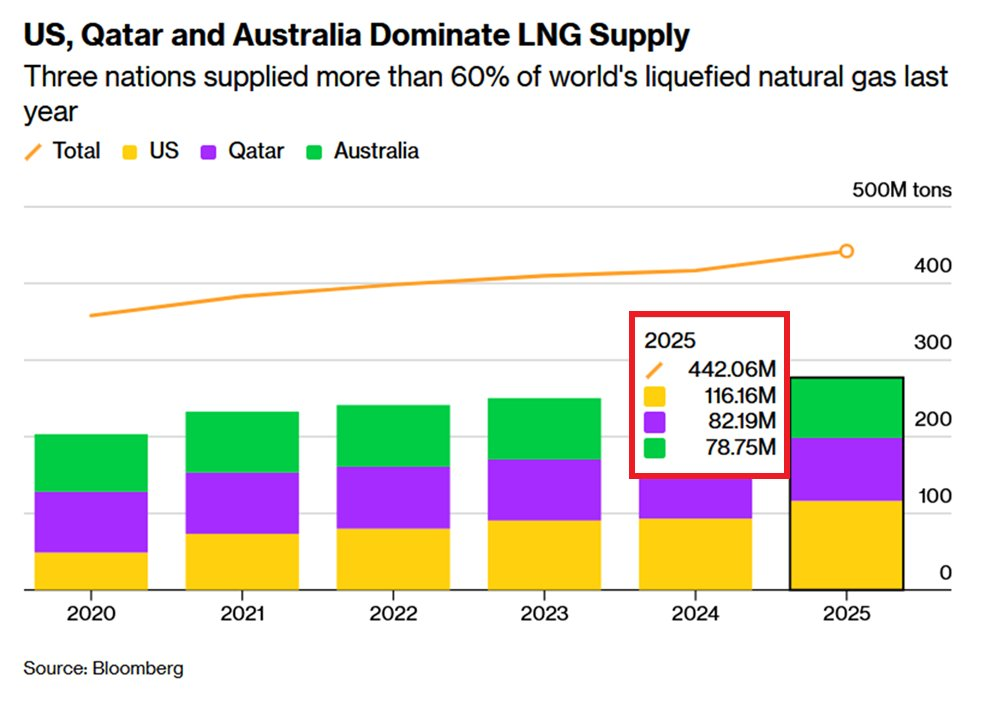
The latest supply data also confirms that the United States, Qatar, and Australia dominate global LNG exports, accounting for more than 60% of global supply. This concentration highlights how disruptions in one key exporting region can rapidly affect global balances and increase volatility.
Trade Flows Shift as Supply Risks Increase
Supply disruptions are already reshaping global LNG trade flows. Reports indicate multiple LNG shipments originally destined for Europe have been redirected to Asia amid tightening supply conditions and rising geopolitical risks.
At the same time, global LNG imports reportedly fell about 26% week over week, while supply declined roughly 16%. These shifts highlight the fragility of the global natural gas market and reinforce how quickly sentiment can change when supply risks emerge. Similar pricing adjustments can also be observed in European gas prices adjusting after recent volatility, showing how regional markets respond differently to global disruptions.
Limited Spare Capacity Raises Structural Risks
Structural supply constraints are also becoming more visible. With US LNG facilities and Australian export capacity already operating near maximum utilization, there is limited short term flexibility to compensate for lost Qatari output.
Analysts warn that prolonged outages could quickly eliminate expected LNG surpluses and potentially shift the market into deficit conditions. Meanwhile, recent price adjustments in Europe demonstrate how quickly supply shocks can reshape pricing dynamics.
Global Energy Market Interconnection Increasing
The latest LNG supply disruption highlights how interconnected global energy markets have become, particularly as natural gas plays a central role in electricity generation, industrial production, and energy transition strategies.
With supply concentrated among a few dominant exporters and limited spare production capacity globally, disruptions to key infrastructure can rapidly affect pricing, trade routes, and overall market stability. As risks increasingly extend beyond oil into natural gas, the situation reinforces how geopolitical tensions and infrastructure vulnerabilities continue to shape the global commodities landscape.
My Take: Qatar’s outage is a stark reminder that LNG market “surpluses” can vanish overnight. With no real spare capacity buffer among the top three exporters, even a brief disruption rewrites trade flows globally and winter demand has not even peaked yet.
Source: Twitter Post by Global Markets Investor



 English