
Natural Gas Plunges 9% After Breaking Below Support, Eyes $2.63 Target
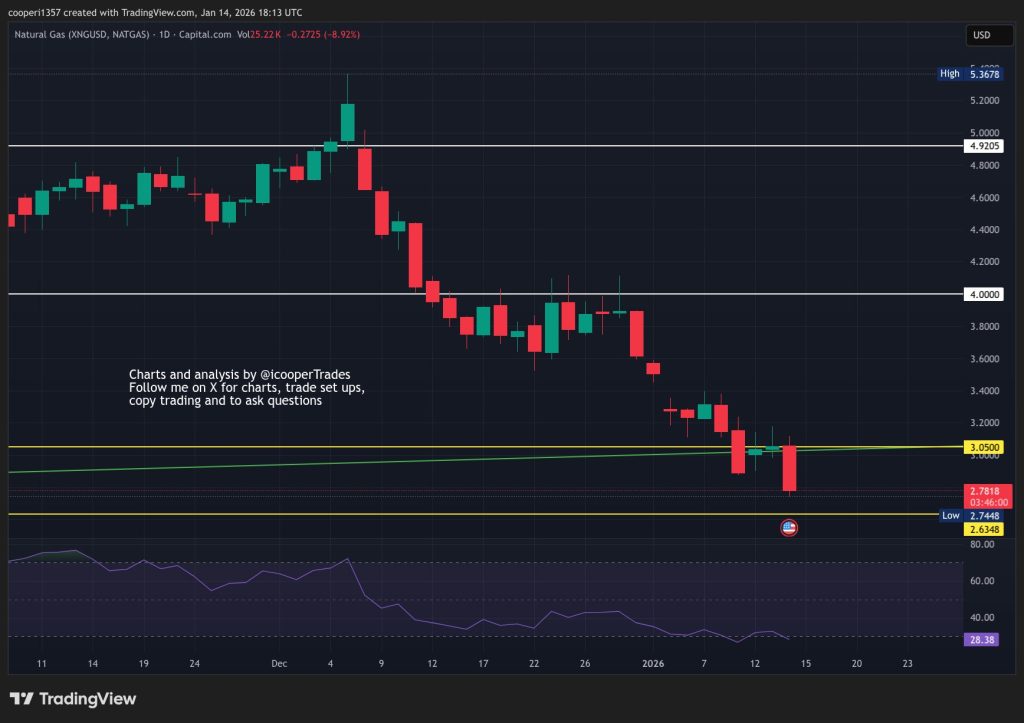
Natural gas prices suffered a sharp selloff, dropping roughly 9% in the latest session after failing to hold a critical support zone. Following two brief attempts to reclaim that level, prices were decisively rejected, triggering accelerated selling pressure. Technical analysis now highlights $2.63 as the next key downside target.
Key Market Developments
Breakdown Below Support
Natural gas briefly traded above a well-defined support area during the previous two sessions, but the move lacked follow-through. The daily chart shows a clear rejection from this zone, followed by a strong bearish candle. Once prices slipped back below support, selling pressure intensified, confirming that buyers were unable to regain control.
Trend Structure and Momentum
The failed recovery attempt reinforces the broader downtrend in place since early December. Former support has now turned into resistance — a classic bearish technical signal. Momentum indicators remain weak, with no clear signs of a bullish reversal at this stage.
Once prices slipped back below the highlighted support zone, selling accelerated, reinforcing the broader downtrend visible since early December.
Downside Levels in Focus
$2.63 as the Next Target
With the breakdown confirmed, traders are now focusing on lower price levels. The $2.63 area stands out as the next meaningful support, aligning with a prior swing low. As long as prices remain below the broken support and under $2.80, the technical setup suggests limited near-term stability.
Unless buyers manage to reclaim the former support zone, downside pressure is likely to persist.
Why This Move Matters
Natural gas plays a central role in the broader energy market, influencing:
- Power generation costs
- Heating expenses
- Overall energy price dynamics
A continued slide toward $2.63 would confirm sustained bearish control and raise the likelihood of further volatility. The market is now watching whether the next support zone can slow the decline or if sellers remain dominant.
Source: ian cooper



 English