
BTC Drawdown at 25% as 650,000 BTC Holders Shape Market Stability
- Bitcoin is experiencing a notably smaller market pullback than in previous cycles, with long-term holders playing a crucial role in maintaining stability. Entities collectively holding around 650,000 BTC have stayed put this cycle, significantly reducing the chances of a severe drop like the 65% crash seen in 2022. The current decline sits at roughly 25% from Bitcoin’s all-time high.
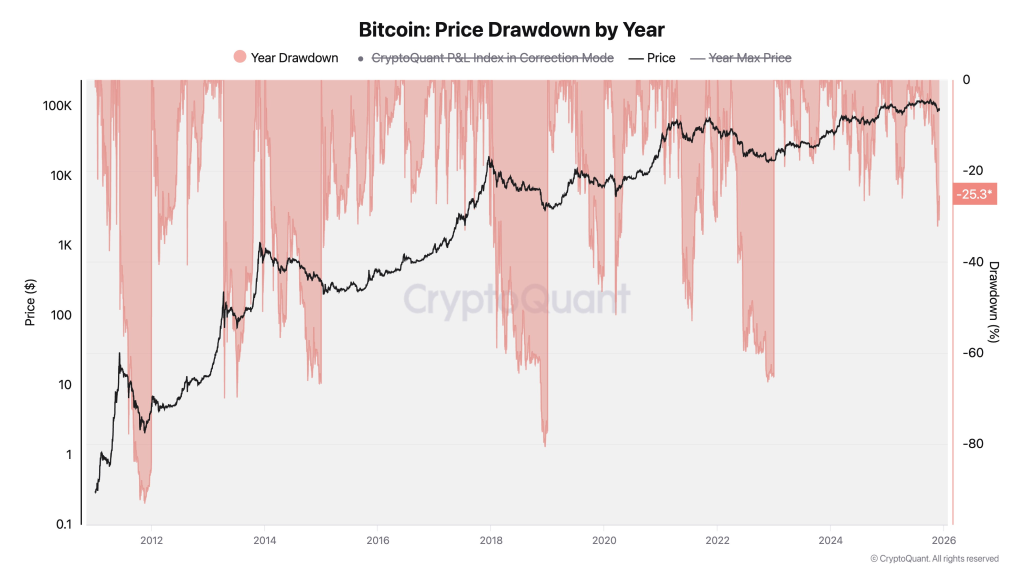
- Past BTC downturns regularly hit 50% to 80%, especially during the brutal bear markets of 2014, 2018, and 2022. Today’s correction looks mild by comparison, even with ongoing price swings. If a broader pullback does materialize, it might play out as an extended sideways grind rather than a sharp plunge. This shift reflects improved liquidity and more diverse demand across the market.
If long-term supply remains intact, future corrections could become more contained, influencing broader sentiment and risk expectations.
- The price stability connects directly to how long-term holders are behaving. Historically, deep crashes happened when large groups of holders dumped their coins aggressively. With supply now concentrated among patient holders showing little interest in selling, Bitcoin’s foundation appears stronger. This pattern could keep dampening volatility as BTC moves through its current cycle phase.
- These shifts matter because they point to Bitcoin maturing as an asset class where drawdowns may no longer reach the extreme levels of the past. If committed holders maintain their positions, future corrections might stay relatively shallow, reshaping how traders and investors view risk. With BTC holding within a historically modest drawdown zone, everyone’s watching whether this holder discipline can hold up as new economic and crypto developments emerge.
My Take: Bitcoin’s behavior this cycle suggests we’re entering a new era of market dynamics. The concentration of supply among long-term holders creates natural support levels that weren’t present in earlier cycles, potentially making extreme crashes less likely.
Source: Ki Young Ju

 English