
SEI Coin Price Outlook at Key Support
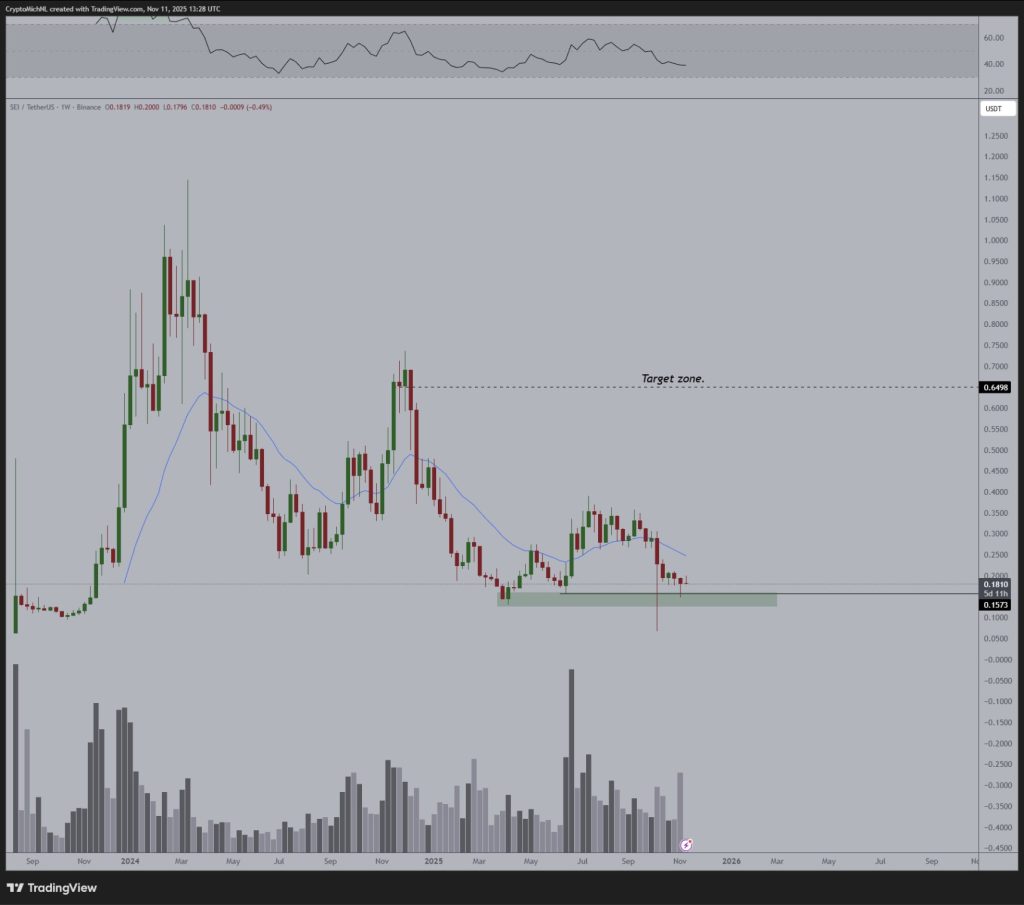
- SEI is trading around $0.18, sitting within a well-defined weekly support zone between $0.17 and $0.18. The chart shows a long-term downtrend beginning to flatten, with rising volume near support and a subdued RSI—classic signs of accumulation. This is the same price region that previously triggered a rally of over 2x, though current market interest remains muted.
- New tax proposals in the digital asset sector have added uncertainty for altcoins like SEI. The proposals include stricter reporting requirements and increased tax burdens on crypto trading. Industry voices warn these measures could trigger liquidity stress, force smaller exchanges into bankruptcy, and push talent toward more crypto-friendly jurisdictions. This regulatory uncertainty contributes to the risk-off behavior seen across smaller-cap assets.
- Crypto industry representatives argue that harsh tax measures may backfire, reducing government revenues by discouraging market activity. They’ve proposed an alternative: raising profit-tax rates for larger institutional players instead of implementing broad retail-focused taxes. This approach could protect innovation while still meeting fiscal goals.
- Beyond taxation, proposed amendments to staking income rules, NDFL guidelines, and compliance requirements could reshape the sector. These policy changes explain the cautious market sentiment reflected in SEI’s compressed price action. The chart shows a potential target zone around $0.65—the next major resistance level that could come into play if conditions stabilize.
- The current setup mirrors conditions before SEI’s previous breakout. Volume is gradually increasing at support while RSI remains muted, potentially signaling seller exhaustion. Accumulating at these levels could prove strategic if regulatory clarity emerges and broader market liquidity returns.
- SEI Coin sits at a critical inflection point. The current accumulation zone could serve as the foundation for another upside cycle—provided macro conditions cooperate.
Source: Michaël van de Poppe


 English