
Gold Holds Near $4,300 as Traders Eye Potential Reversal
Gold’s been sitting pretty near its peak levels following an impressive run earlier this year. Traders are starting to wonder what comes next if prices begin pulling back from here. The charts show XAU/USD hanging around its upper range after smashing through a lengthy consolidation zone, though the upward momentum seems to be cooling off rather than pushing higher.
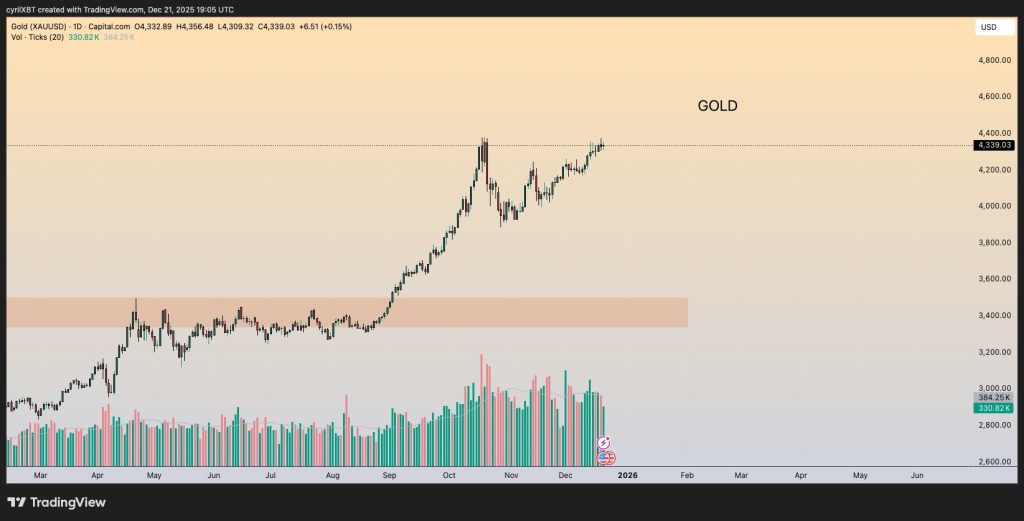
Looking at the price action, there’s a clear shift from months of sideways movement into a strong breakout rally. Gold rocketed from around $3,000 up to the $4,300 zone before hitting the brakes. Now it’s basically treading water near those highs, which matches what the charts are showing—that initial burst of energy has faded while price stays well above where it used to struggle.
As one market observer noted, “The absence of continued upside momentum suggests the market may be approaching a decision point.”
Volume tells an interesting story too. It spiked during the breakout, confirming buyers were serious about pushing through resistance. But once gold reached these elevated levels, volume dropped off as the price started consolidating. There’s no clear breakdown yet, but the lack of follow-through buying has traders wondering if we’re at a turning point. That old resistance zone where gold used to get stuck? That’s now the key level everyone’s watching.
Why does this matter? Gold often acts as a bellwether during shifting market conditions. If we see a legitimate reversal from here, it could signal that traders are rotating capital elsewhere—maybe taking profits and putting them into other assets. On the flip side, if gold just keeps consolidating at these highs, it means demand is still solid. Either way, the next move in gold will likely ripple across commodities, currencies, and broader risk markets.
My Take: Gold’s pause near $4,300 feels like the market catching its breath after a monster rally. The real question is whether buyers can defend these levels or if profit-taking kicks in. Watch that former resistance zone closely—it’s the line in the sand now.
Source: CyrilXBT



 English