
Copper Consolidates for 2 Months as Long-Term Cycle Builds Since 2020
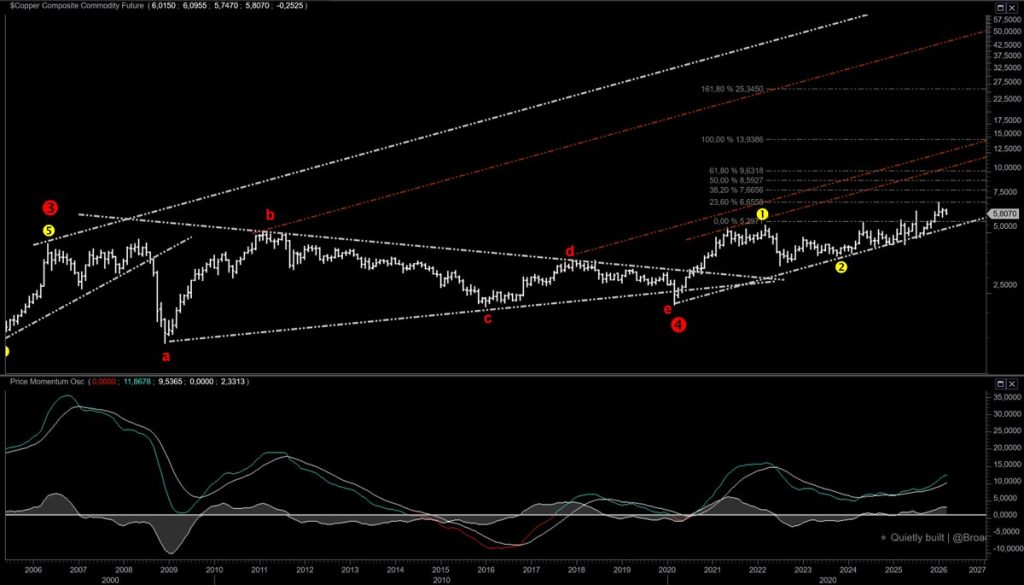
The recent consolidation in copper may represent a healthy pause within a broader commodity cycle rather than a sign of structural weakness. Market data shows that the metal has been trading sideways for roughly two months while still holding within the long-term rising structure that began after the 2020 market lows.
Recent macro developments also highlight how copper continues to interact with broader financial trends. For example, copper-gold ratio drops to historic lows in 2025 as safe-haven demand surges, reflecting shifts in global risk sentiment and capital flows between industrial and defensive assets.
Sideways Phase Reflects Market Stabilization
Recent price behavior suggests that copper has entered a stabilization phase rather than breaking its broader bullish structure. Over the past two months the market has been moving sideways, which analysts view as a normal stage of consolidation.
Historically, copper cycles often begin with periods of range-bound trading rather than rapid price expansion. These phases allow the market to absorb earlier gains, rebalance positioning, and reset momentum indicators before the next directional move develops.
Current chart structures confirm that copper continues to trade within the rising channel that has been forming since the pandemic-era lows of 2020.
Copper Trends Develop Slowly
Unlike precious metals such as silver, copper typically moves through longer and more structural cycles. Major copper trends rarely begin with vertical price rallies. Instead, they usually start with gradual phases of stabilization and consolidation.
Analysts often emphasize that major commodity cycles tend to build quietly before becoming visible to the broader market.
“Major copper cycles tend to build slowly and quietly before becoming obvious to everyone.”
This behavior reflects copper’s central role as a key industrial material used in construction, manufacturing, and global infrastructure projects. Because copper demand closely tracks economic growth and industrial expansion, the metal is frequently considered a leading indicator of global economic activity and is often referred to as “Dr. Copper.”
Miners Often Correct During Cycle Formation
Another important signal in the current outlook is the behavior of mining equities. Copper mining companies have recently entered a corrective phase, which analysts say commonly occurs during the early stages of commodity cycle formation.
In many commodity markets the sequence tends to follow a familiar pattern. The underlying metal stabilizes first, mining companies correct or consolidate, and only later does broader sector momentum accelerate.
This capital flow dynamic often reflects how investors gradually rotate into commodity sectors as long-term cycles mature.
Long-Term Structure Remains Intact
Despite the recent consolidation, the broader market structure remains constructive. Copper continues to trade within the rising channel that has been developing since the 2020 lows, and there are currently no clear technical signals of structural breakdown.
Fundamental demand drivers also remain supportive. Structural trends such as global electrification, renewable energy infrastructure, and expansion of power grids are expected to increase long-term copper consumption.
These themes continue to support the idea that copper may remain one of the key strategic commodities of the global energy transition.
Market Outlook
Overall, the current sideways movement appears consistent with a natural pause inside a developing commodity cycle. Historically, copper markets build momentum gradually before attracting large-scale investor attention.
If the current structural pattern remains intact, the ongoing consolidation phase could become the base from which the next major expansion in the copper market develops.



 English