AI News: 10+ Years of Breakthroughs Behind Today’s Tech Shift
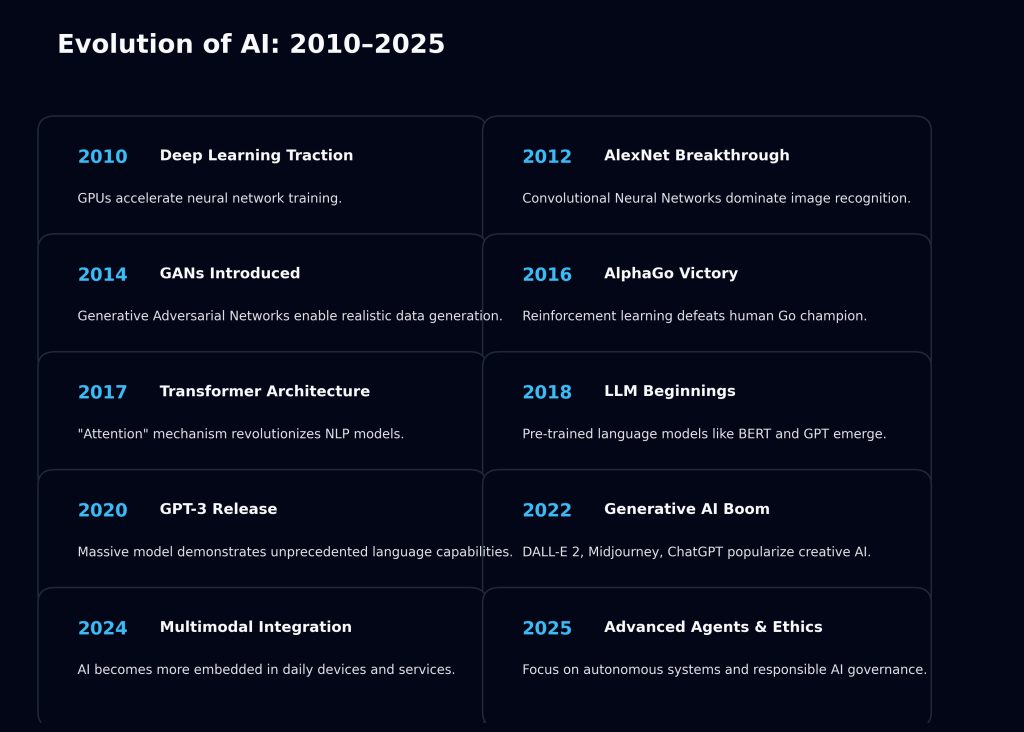
- The AI revolution has been building for over a decade, though mainstream adoption only took off in the last two to three years. The real game-changer came in 2017 with Transformer architecture, which let models understand and generate language at massive scale. This breakthrough paved the way for systems like GPT-3 and the powerful large language models now used across industries. The timeline tracks this journey from deep-learning momentum in 2010 all the way to multimodal and agent-driven capabilities expected in 2025.
- New tax proposals are raising eyebrows as governments scramble to regulate fast-moving AI adoption. Draft amendments would hit compute-intensive clusters with higher taxes and force advanced AI developers to file more reports. Industry groups are sounding alarms—these measures could bankrupt smaller companies, kill model-development capacity, and push talent overseas. The stakes are even higher now that reasoning-enhanced systems and agentic models need computational resources that dwarf earlier generations.
AI is now entering a phase where models generate code, combine modalities, and autonomously manage complex workflows, signaling sustained demand for high-performance infrastructure.
- The industry is pushing back with alternative solutions that protect both innovation and public revenue. AI has reached a stage where models write code, blend different types of data, and handle complex workflows on their own—all of which demands serious computing power. Sector representatives warn that taxing compute usage could actually shrink long-term tax revenues by choking off tech growth. Their counter-proposal? Adjust profit-tax rates for the highest-earning AI developers instead of taxing infrastructure, claiming this keeps expansion alive while still filling government coffers.
- The ripple effects touch everything from jobs to tax flows to digital infrastructure oversight. Policymakers worry that heavy-handed rules could crush high-skilled job creation and slash contributions to income and profit taxes if innovation moves abroad. The timeline makes it clear why these regulatory calls matter so much: every tech leap from GANs to generative AI to agentic systems has pumped up economic output. Keeping regulations supportive is critical as the sector races through this early, explosive growth phase.
My Take: The 2017 Transformer breakthrough didn’t just improve AI—it fundamentally changed what’s possible. Now regulators face a tough choice: tax infrastructure and risk killing the golden goose, or tax profits and keep innovation humming while revenue flows in.
Source: Haider



 English