
AI Boom Raises Big Tech Spending Risks
The artificial intelligence race is entering a new phase defined not just by innovation but by unprecedented capital spending. As major technology companies pour hundreds of billions into AI infrastructure, questions are emerging about whether current investment levels can be justified by future profits. While demand for generative AI remains strong, the long term sustainability of this spending cycle increasingly depends on whether leading AI developers can successfully monetize their platforms.
AI Investment Cycle Accelerates
The artificial intelligence investment cycle is accelerating as companies connected to OpenAI and Anthropic drive massive spending across the technology sector. As Reuters Breakingviews noted, major firms including Microsoft, Amazon, Alphabet, and Meta are expected to spend roughly $650 billion on AI infrastructure this year, much of it tied to the expansion of generative AI systems.
The rapid expansion highlights how dependent Big Tech capital spending has become on the continued growth of leading AI developers. Recent developments such as OpenAI’s $110B funding round and rising cash burn show how aggressively companies are raising capital to maintain their competitive position.
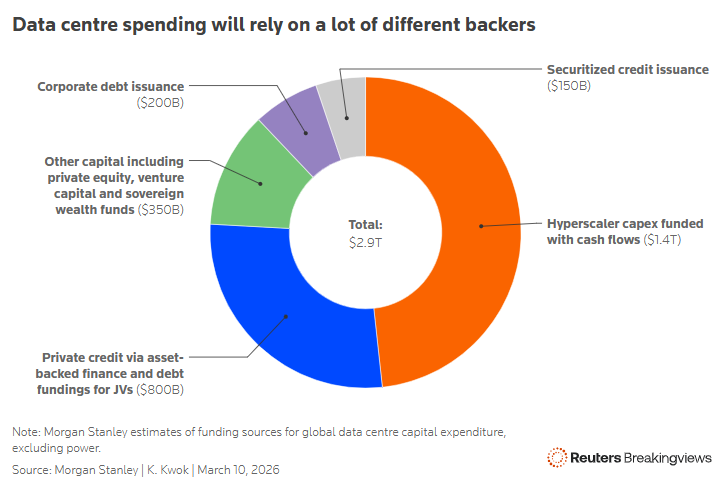
The Trillion Dollar Infrastructure Buildout
The financial scale behind the AI boom continues to expand. Morgan Stanley estimates global data center investment could reach approximately $2.9 trillion between 2025 and 2028, while OpenAI alone may require more than $200 billion in additional funding by 2030. The company recently secured a massive funding round, reinforcing how capital intensive the AI race has become.
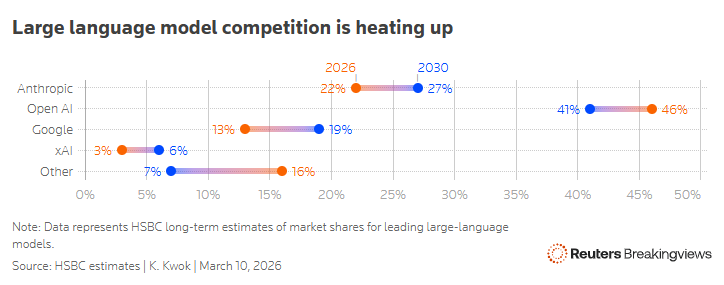
At the same time, competitors are also raising significant capital. Reports about Anthropic’s planned multi-billion funding efforts illustrate how funding competition between AI labs continues to intensify.
If companies such as OpenAI or Anthropic fail to meet monetization expectations, the consequences could extend beyond startups to cloud providers, semiconductor suppliers, and infrastructure investors.
Reuters also reported OpenAI generated roughly $25 billion in annualized revenue, highlighting strong growth despite heavy costs.
Profitability Questions Grow
Financial sustainability remains a key concern as competition intensifies. Anthropic has reportedly spent over $10 billion to build its AI models while generating about $5 billion in cumulative revenue, illustrating the difficult economics of large language model development.
The company continues to pursue additional capital while competitive innovation across the sector continues. This includes initiatives such as Anthropic expanding enterprise AI tools which demonstrate how AI firms are trying to diversify revenue through enterprise adoption.
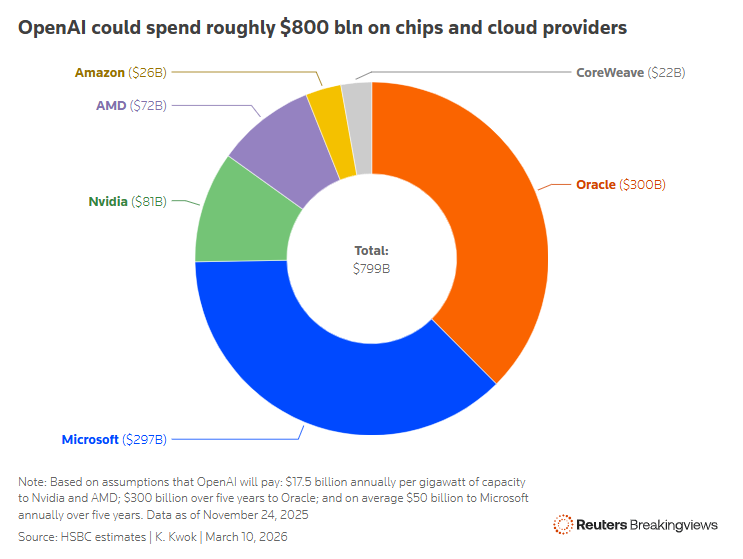
Meanwhile, OpenAI continues expanding its platform capabilities through updates across OpenAI’s evolving AI product ecosystem as competition increasingly shifts toward real world applications and enterprise integration.
Systemic Risks From AI Concentration
The broader concern is that the AI investment boom increasingly depends on the commercial success of a small number of AI labs. If companies such as OpenAI or Anthropic fail to meet monetization expectations, the consequences could extend beyond startups to cloud providers, semiconductor suppliers, and infrastructure investors.
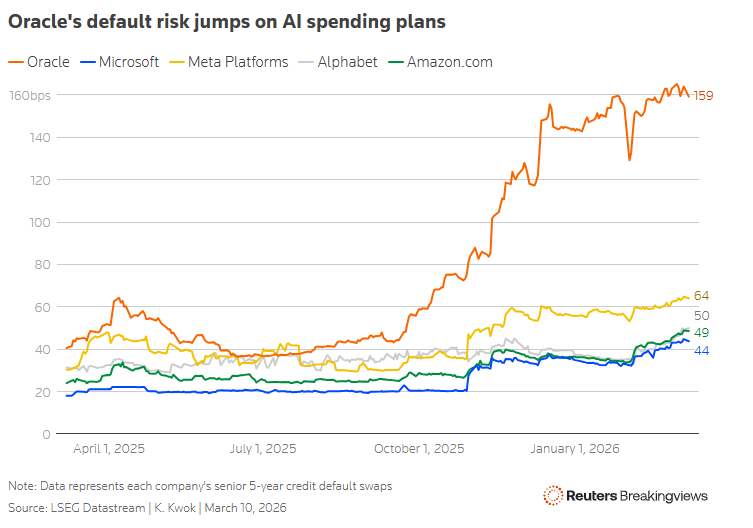
As AI spending becomes a larger share of global technology capital expenditure, the sustainability of this cycle may ultimately determine whether the current AI expansion represents a durable transformation or an overheated investment phase.
My Take: The numbers are staggering, but the math does not yet add up. Until AI labs turn trillion dollar infrastructure into reliable profit, Big Tech spending looks more like a high stakes bet than a proven business model.
Source: Reuters Breakingviews



 English