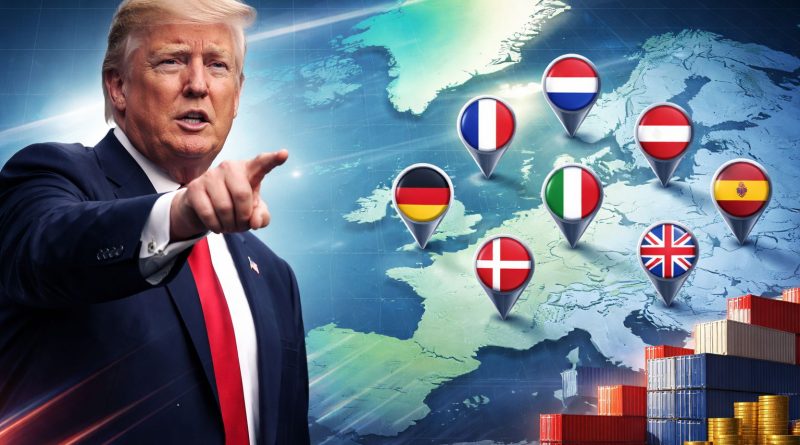
Trump Announces 10–25% Tariffs on Seven European Nations Over Greenland Dispute
Former U.S. President Donald Trump announced new U.S. tariffs ranging from 10% to 25% on imports from seven European countries, linking the trade measures to European military activity in Greenland. The statement, published on Truth Social, marks a renewed escalation in transatlantic trade tensions and introduces fresh uncertainty for global markets.
According to Trump, the tariffs will take effect on February 1 at a 10% rate and rise to 25% by June if what he described as a “Greenland deal” is not reached. The announcement did not specify which goods or sectors would be targeted, leaving businesses and investors without clarity on the scope of the measures.
The move signals a broader use of tariffs as a geopolitical tool rather than a strictly economic one, raising concerns about potential retaliation, supply chain disruptions, and increased market volatility.
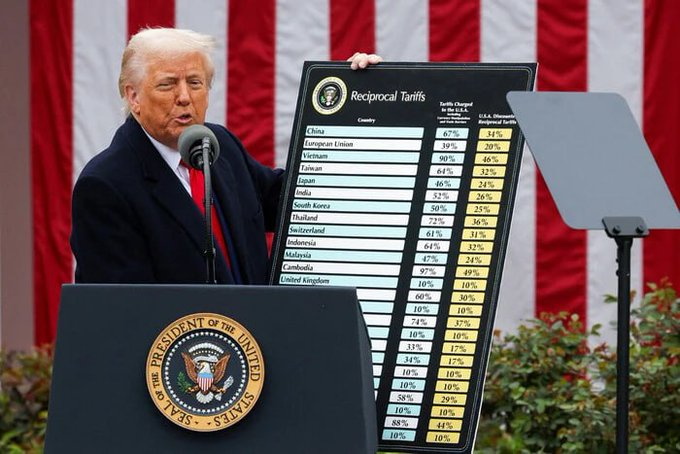
Key Tariff Announcement
The tariffs target imports from:
- Denmark
- Norway
- Sweden
- France
- Germany
- United Kingdom
- Netherlands
Tariff Timeline
- February 1: A 10% tariff on U.S. imports from the listed countries
- June 1: Tariffs increase to 25% if no agreement is reached
Trump did not specify which goods or sectors would be affected, leaving companies and investors uncertain about the full scope of the measures.
Greenland Link and Political Messaging
In a post on Truth Social, Trump criticized the European military presence in Greenland, describing it as a mission with “unknown objectives.” He stated that the tariffs would remain in place until what he referred to as a “Greenland deal” is reached.
However, the announcement offered no clarification on:
- What conditions such a deal would require
- Which governments would be involved
- Whether the United States is seeking military, diplomatic, or economic concessions
This lack of detail has amplified uncertainty around both trade and geopolitical intentions.
Why This Matters
This move reflects a familiar Trump strategy: using tariffs as leverage to pursue geopolitical objectives rather than strictly economic ones. By conditioning tariff removal on an undefined outcome, the policy introduces a level of unpredictability that markets typically respond to negatively.
The seven targeted countries represent some of the United States’ most important trading partners. Tariffs at this scale could:
- Disrupt transatlantic supply chains
- Increase costs for manufacturers and consumers
- Shift trade flows and sourcing strategies
- Undermine investor confidence amid already fragile global conditions
The explicit linkage between trade policy and military activity marks a notable escalation in how tariffs are being deployed as a foreign-policy tool.
Market and Investor Outlook
For traders and investors, the announcement raises several risks:
- Heightened volatility in sectors exposed to European imports
- Potential retaliation from European governments
- Broader strain on U.S.–EU economic relations
Markets are likely to remain sensitive to any further clarification—or escalation—regarding the proposed “Greenland deal” and its implications.
Sources:
- Statement published on Truth Social
- Reporting attributed to NEXTA
- Commentary attributed to Haider


 English