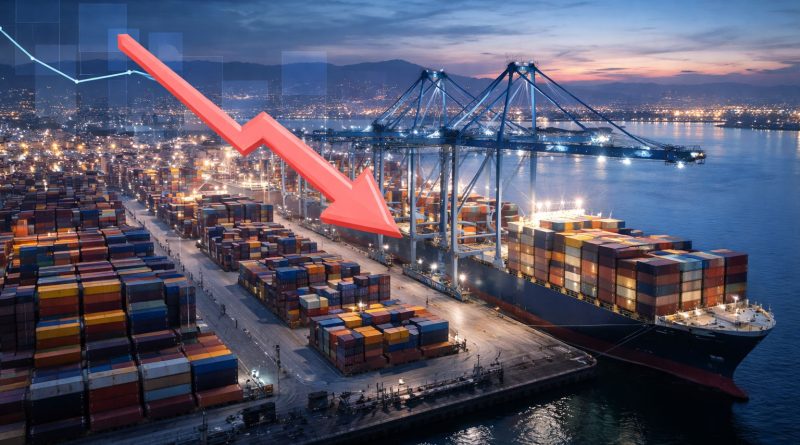
Port of Los Angeles Container Traffic Falls 12% in January 2026
The Port of Los Angeles reported a significant slowdown in container volumes in January 2026, marking a reversal from the elevated shipping activity seen last year. Total container traffic fell 12% compared with January 2025, reflecting a normalization in trade flows after businesses rushed to move goods ahead of tariff related policy changes.
As one of the largest US gateways for international trade, the port serves as a key indicator of consumer demand and broader economic momentum.
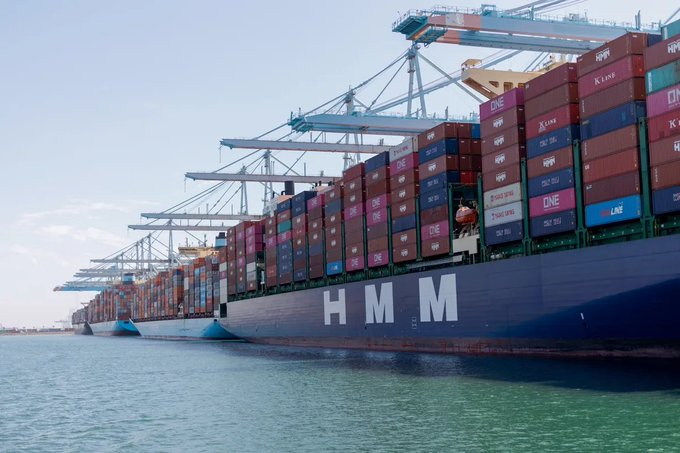
January 2026 Container Volume Breakdown
Imports
Imports declined nearly 13% year over year to approximately 422,000 twenty foot equivalent units. The drop follows an unusually strong comparison period in early 2025, when companies accelerated shipments to avoid potential tariff increases.
The cooling suggests businesses are no longer stockpiling inventory at the same pace and are taking a more measured approach to supply chain planning.
Exports
Exports fell 8% compared with the same month last year. While less severe than the import decline, the decrease points to softer outbound trade activity and potentially weaker global demand.
Empty Containers
Empty container volumes dropped 12.5%, reinforcing the broader slowdown across inbound and outbound cargo flows. The decline in empty repositioning aligns with reduced overall shipping activity.
Why Volumes Are Slowing
Port Director Gene Seroka attributed much of the decline to last year’s front loading effect. Companies rushed shipments ahead of tariff deadlines, creating an artificially elevated baseline in early 2025.
With that surge now behind the market, inventory strategies are shifting. Businesses are reportedly being more selective with restocking decisions. However, advance purchase orders from Asia remain stable for now, suggesting that trade flows have cooled rather than collapsed.
The National Retail Federation expects softer import activity through the first half of 2026. Ongoing tariff uncertainty continues to weigh on importer confidence and purchasing decisions.
What This Means for the US Economy
The Port of Los Angeles often acts as a barometer for US trade conditions and consumer demand. January’s 12% decline underscores how tariff dynamics continue to shape trade patterns.
The slowdown appears to reflect normalization from unsustainably high levels rather than a structural breakdown in trade. Still, sustained weakness in both imports and exports could signal softer economic momentum if it persists into the second quarter.
Outlook for 2026
The key variable to monitor is whether advance purchase orders from Asia remain steady or begin to decline in the second quarter. If order volumes hold, trade activity may stabilize at more sustainable levels. If they weaken, container traffic could face additional downside pressure in the months ahead.
For now, January’s sharp drop looks more like a reset after last year’s surge than the start of a prolonged contraction.
Source: Social media update by Walter Bloomberg



 English