
Inflation Drops to 1.87% as US CPI Tracker Signals Cooling Price Growth
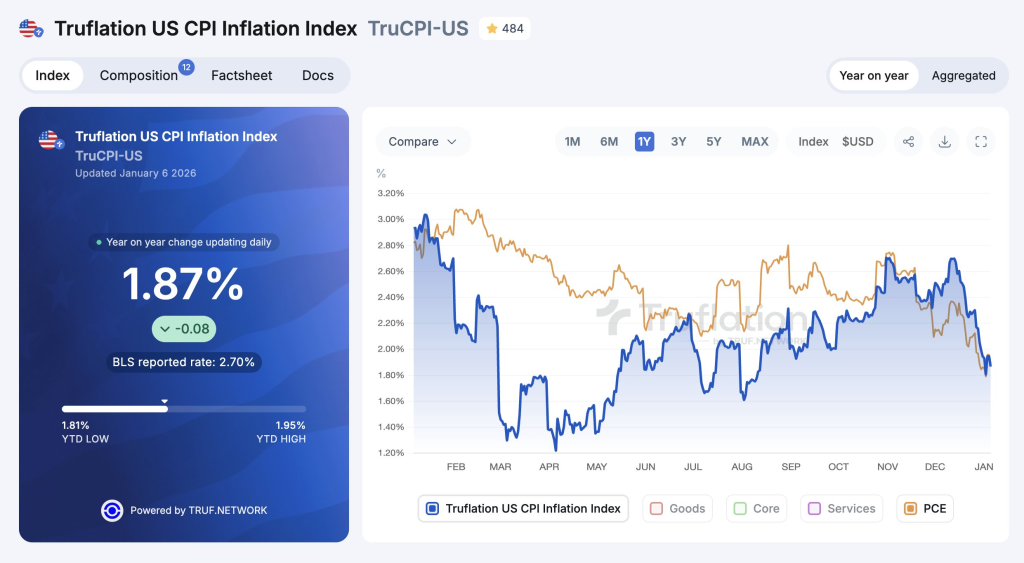
US inflation is showing renewed signs of cooling. Truflation’s real-time inflation tracker indicates that the US CPI Inflation Index has fallen to 1.87%, slipping back below the 2% threshold after a brief weekend spike. The data suggests that price growth remains on a downward trajectory, with housing costs playing a key role in the recent decline.
Key Results from the Inflation Tracker
CPI and PCE Trends
- CPI Inflation Index: 1.87%
- PCE Inflation Measure: 1.89%
- Inflation briefly rose to 1.95% over the weekend before resuming its downward trend
- Both measures have remained below 2% since late December
Truflation’s high-frequency data shows that the recent uptick did not alter the broader disinflationary direction. The latest readings place inflation near the lower end of its recent range.
Housing and Price Components
- Housing costs were the primary driver of the latest pullback
- Shelter inflation continues to ease, aligning with real-time rental data
- Millions of individual price points are used, offering a more immediate view than official CPI releases
The ongoing softening in housing prices suggests further downside pressure on inflation in the weeks ahead.
Why This Matters
Real-time inflation data falling below 2% can significantly influence:
- Market expectations for interest rates
- Federal Reserve policy outlook
- Risk pricing across equities, bonds, and currencies
Housing has emerged as a consistent source of disinflation, reinforcing the idea that price pressures are easing in a more durable way rather than through short-term volatility.
Outlook and Implications
If Truflation’s inflation tracker remains below 2%:
- The soft-landing narrative for the US economy gains credibility
- Pressure on interest rates could remain limited
- Markets may increasingly price in stable or easing financial conditions
While short-term noise remains possible, the broader trend continues to point toward slowing inflation momentum.
My Take
The housing-driven decline appears more structural than temporary, especially given how shelter inflation typically lags real-time rental trends. If inflation continues to hold below 2%, it strengthens the case for easing price pressures and reduces the urgency for tighter monetary policy.
Source: Truflation


 English