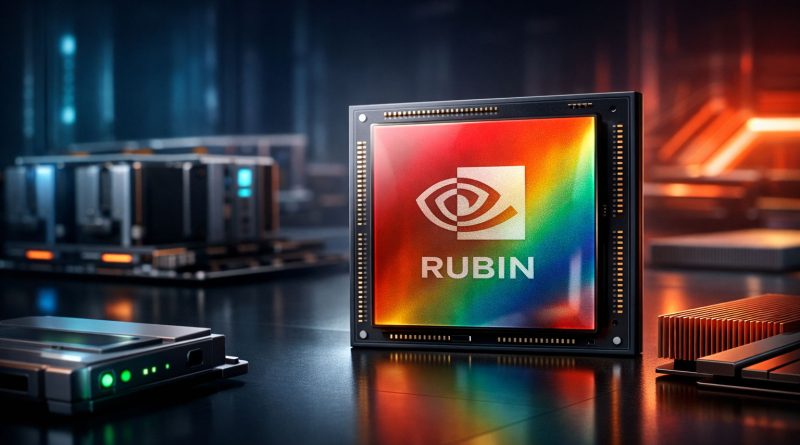
Nvidia Unveils Rubin AI Chips, Promising 10x Lower Inference Costs and 4x Fewer GPUs
Nvidia has unveiled Rubin, its next-generation AI chip platform designed to dramatically cut inference costs, reduce GPU requirements for training, and improve energy efficiency across large-scale AI deployments. The announcement positions Rubin as a critical step in scaling frontier AI models as compute costs and power consumption continue to rise across the industry.
Rubin Enters Nvidia’s AI Compute Roadmap
Rubin becomes the latest addition to Nvidia’s rapidly evolving AI hardware roadmap, following platforms such as Hopper and Blackwell. The company is targeting one of the biggest challenges in AI today: the growing cost and complexity of training and running massive models at scale.
The launch has already attracted attention from industry leaders. Elon Musk described Rubin as “a rocket engine for AI,” emphasizing its role in handling both training and inference workloads for next-generation models. His comments reinforce Nvidia’s reputation as the benchmark provider of AI infrastructure.
Inference and Training Efficiency
According to Nvidia, Rubin is designed to deliver up to a 10x reduction in inference token costs, significantly lowering the expense of running AI systems in production. This improvement could have a major impact on companies deploying large language models, where inference costs often exceed training expenses over time.
For training workloads, particularly Mixture of Experts (MoE) models, Rubin may reduce GPU requirements by as much as 4x compared to Nvidia’s Blackwell platform. Fewer GPUs translate into lower capital expenditure, reduced power draw, and simpler system orchestration.
Power, Networking, and Reliability
Rubin is optimized to work alongside Spectrum-X Ethernet Photonics, enabling:
- Up to 5x better power efficiency
- Improved uptime and reliability
- Higher-density AI cluster deployments
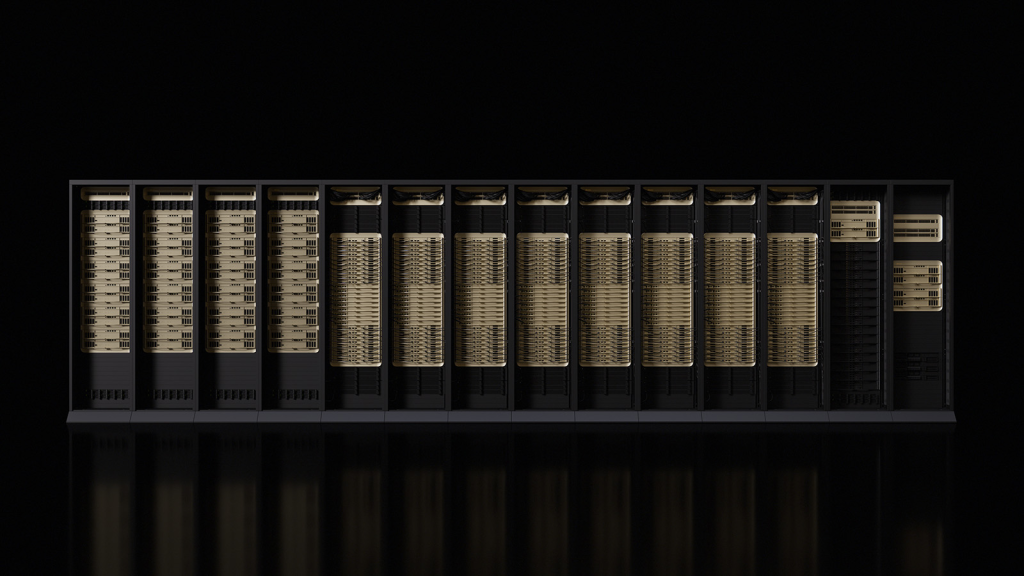
Nvidia is also introducing third-generation confidential computing with Rubin, strengthening security for sensitive AI workloads in cloud and enterprise environments. Early deployment visuals highlight the platform’s focus on large-scale data center infrastructure rather than edge or consumer use cases.
Why Rubin Matters for the AI Industry
As AI models grow larger and more expensive to operate, infrastructure has become a limiting factor. Rubin directly addresses three of the industry’s biggest pain points:
- Soaring inference costs
- Escalating energy consumption
- Dependence on massive GPU clusters
With Nvidia already dominating global AI compute supply, Rubin’s efficiency-focused design could shape how companies scale AI systems over the next several years. Lower costs and improved power efficiency may allow more organizations to deploy advanced AI models beyond the largest tech firms.
Outlook: What to Expect in 2026
If Nvidia’s performance claims are validated in real-world deployments, Rubin could mark a turning point for AI infrastructure economics. A combination of 10x cheaper inference and 4x fewer GPUs for training would make large-scale AI significantly more accessible and sustainable.
As demand for AI continues to surge in 2026, Rubin positions Nvidia to extend its leadership by offering not just more powerful hardware—but more efficient and economically viable AI systems.
Source: Analysis and commentary by Sawyer Merritt



 English